




Most people assume the best skincare results live behind a spa’s front desk. That assumption is getting harder to defend. Why at-home results rival clinical spas is no longer a niche debate among beauty enthusiasts. It is a question backed by peer-reviewed research, FDA regulatory frameworks, and a new generation of devices that operate on the same biological principles as professional equipment. If you have been spending hundreds on spa appointments while wondering whether your bathroom shelf could do more, this guide will give you a clear, science-grounded answer.
Table of Contents
- Key takeaways
- Why at-home results rival clinical spas: the science of light therapy
- At-home vs. professional microneedling
- FDA clearance and why it matters to you
- Building a routine that actually works
- My take on the at-home vs. clinical debate
- Discover what Tight Club’s tools can do for your skin
- FAQ
Key takeaways
| Point | Details |
|---|---|
| Device parameters matter most | Wavelength and irradiance, not price or brand, determine whether an LED device delivers real skin benefits. |
| At-home LED shows clinical results | Studies report 81% of participants saw texture and wrinkle improvement after 12 weeks of home LED use. |
| Microneedling has clear limits at home | Shallow needle depths work for maintenance but cannot replicate deep scar remodeling done professionally. |
| FDA clearance is a reliable filter | Cleared devices meet a safety and efficacy benchmark that separates serious tools from marketing hype. |
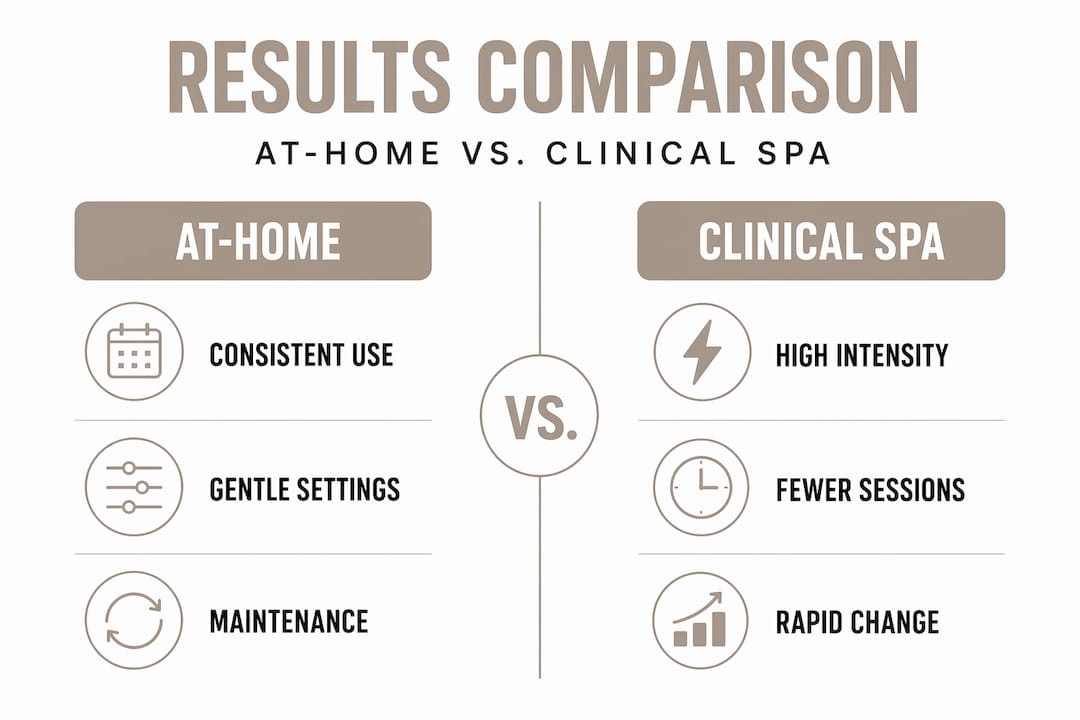
| Consistency beats single spa visits | Regular at-home use combined with occasional professional treatments produces the most lasting visible results. |
Why at-home results rival clinical spas: the science of light therapy
The technology at the center of this conversation is photobiomodulation (PBM). Think of it as a conversation between specific wavelengths of light and your skin cells. When red or near-infrared (NIR) light reaches the mitochondria inside your skin cells, it stimulates energy production, collagen synthesis, and cellular repair. This is not a cosmetic trick. It is a measurable biological process that works the same way whether the light source sits in a clinical suite or on your bathroom counter.
The key variables are wavelength, irradiance (power per unit area), and fluence (total energy delivered). A 2026 evidence review confirms that red and NIR LED photobiomodulation produces moderate, clinically relevant improvements in skin texture, elasticity, and wrinkle depth when devices meet specific parameter targets. The word “specific” is doing a lot of work in that sentence. Not every device qualifies.
Here is what separates effective at-home LED devices from the ones that collect dust:
- Wavelength: Red light at 630 to 660 nm targets surface-level collagen and inflammation. NIR light at 810 to 850 nm penetrates deeper, reaching the dermis and underlying tissue.
- Irradiance: Clinical devices typically deliver higher power density, but well-designed consumer devices can approximate therapeutic windows with longer session times.
- Spectrum breadth: Newer NIR devices emitting across 600 to 900 nm activate multiple cellular pathways simultaneously, improving outcomes compared to narrow-band devices.
- Session consistency: Unlike a monthly spa visit, daily or near-daily home use accumulates therapeutic dose over time.
One controlled clinical trial found that 81% of participants showed measurable improvement in facial texture and wrinkles after 12 weeks using a combination of 633 nm and 830 nm LED light at home. That is a result most spa clients would be satisfied paying for.
Pro Tip: Before purchasing any LED device, check the product specifications for wavelength range and irradiance output. If those numbers are not listed, the brand is not being transparent about what matters most.
At-home vs. professional microneedling
Microneedling is where the at-home versus clinical comparison gets more nuanced. Both approaches use fine needles to create micro-channels in the skin, triggering collagen remodeling. But the depth of those channels changes everything about what the treatment can achieve.
| Feature | At-home devices | Professional treatments |
|---|---|---|
| Needle depth | 0.25 to 0.5 mm | 1.0 to 2.5 mm or more |
| Collagen remodeling depth | Superficial epidermis | Deep dermis |
| Suitable for | Texture, tone, product absorption | Scars, deep wrinkles, significant laxity |
| Sterility control | User-dependent | Clinic-controlled |
| Recovery time | Minimal | 24 to 72 hours of redness |
| Cost per session | Low (device amortized) | High ($200 to $700+) |
At-home microneedling devices use shallower needle depths, typically 0.25 to 0.5 mm, which limits their ability to address deep scarring or significant wrinkle remodeling. What they do well is maintain skin texture, improve product penetration, and keep mild skin concerns in check between professional appointments. That is a legitimate and valuable role, just not the same role.
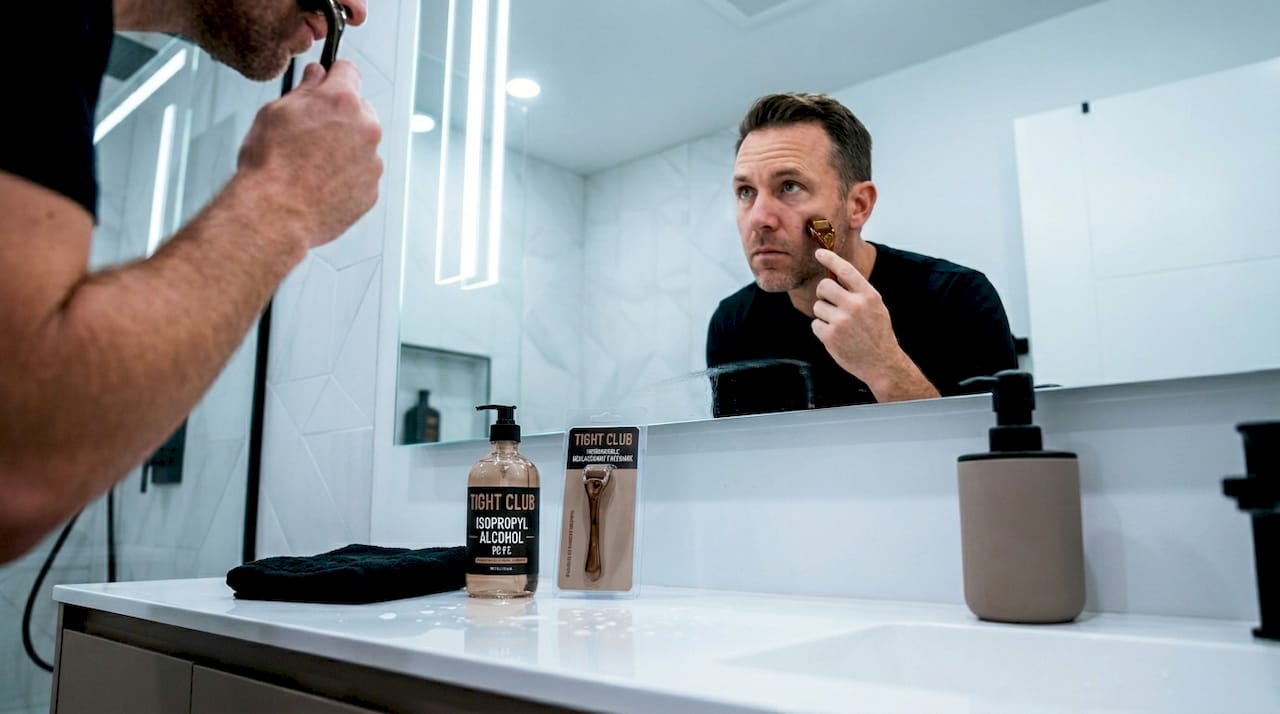
Safety is the other side of this equation. Misuse or poor hygiene during at-home microneedling can cause irritation, post-inflammatory pigmentation, or infection. The risk is not the device itself. It is the user’s technique and sterilization habits.
Pro Tip: Replace your at-home microneedling cartridge after every 3 to 5 uses and clean the device with 70% isopropyl alcohol before and after each session. Overuse is the most common mistake, and it is entirely avoidable.
The honest framing here is that at-home microneedling excels as a maintenance tool. For deeper remodeling, a professional visit two to three times a year makes sense as a complement, not a replacement for your home routine.
FDA clearance and why it matters to you
There is a meaningful difference between FDA “approval” and FDA “clearance,” and understanding it will save you from wasting money on ineffective devices. FDA approval requires extensive clinical trial data proving a drug or device treats a specific condition. FDA clearance, granted through the 510(k) pathway, means a device is substantially equivalent to a legally marketed predicate device in terms of safety and intended use.
For at-home skincare devices, clearance is the relevant benchmark. It tells you the device has been reviewed, its claims are not fabricated, and its safety profile has been evaluated. Consumers increasingly treat FDA clearance as a trusted filter when spending hundreds on at-home skincare technology, and that instinct is well-founded.
Here is what FDA clearance signals in practical terms:
- The device’s intended use (anti-aging, acne reduction, skin rejuvenation) has been reviewed against existing evidence.
- The manufacturer cannot make unsupported therapeutic claims without regulatory scrutiny.
- The device meets basic safety standards for consumer use, including electrical safety and light emission limits.
Consumer standards have risen sharply, pushing brands to develop devices with clearer usage guidelines, built-in timers, and validated efficacy data. This is good news for you. The market is self-correcting toward transparency, and FDA clearance is the clearest signal of that commitment.
The practical takeaway is simple: when you are evaluating clinical spa alternatives, look for FDA-cleared devices with published parameter data. That combination tells you the product was built to deliver results, not just to look impressive on a shelf.
Building a routine that actually works
Understanding the science is one thing. Putting it into a routine that produces visible, lasting results is another. The most effective at-home skincare approach treats devices and products as a system, not a collection of individual purchases.
Here is a practical framework for integrating at-home treatments effectively:
- Start with your LED device. Use your red or NIR light panel before applying any active skincare products. Clean, dry skin allows maximum light penetration without interference from serums or creams.
- Apply your actives immediately after. Post-LED skin has enhanced cellular receptivity. Vitamin C, hyaluronic acid, and peptides absorb more effectively in this window, amplifying the benefits of both the device and the product.
- Add microneedling one to two times per week on separate days. Do not combine LED and microneedling in the same session unless your device is specifically designed for that protocol. Give your skin 24 hours between sessions.
- Track your results at four-week intervals. Take photos in consistent lighting. Visible improvement in texture and tone typically becomes apparent between weeks six and twelve, consistent with clinical trial timelines.
- Schedule professional treatments strategically. Home devices complement professional care rather than replace it. A professional chemical peel or deeper microneedling session once or twice a year can reset your baseline, while your home routine maintains and builds on those results.
The biggest mistake people make is treating at-home devices as a shortcut to skipping professional care entirely, or conversely, dismissing them as inferior and continuing to rely solely on expensive spa appointments. The truth is that home LED and skincare combined sustain skin improvements between professional procedures and, over time, can reduce how often you need those procedures at all.
My take on the at-home vs. clinical debate
I have watched this conversation shift dramatically over the past several years. When at-home devices first started gaining attention, the default response from most skin professionals was polite dismissal. The assumption was that real results required real equipment, meaning clinic-grade machines operated by trained hands.
What changed my thinking was not marketing. It was watching people with consistent at-home routines show up to consultations with genuinely better skin than clients who were spending three times as much on monthly spa visits but doing nothing in between. The difference was not the device brand. It was the frequency of use and the quality of the parameters.
The conventional view underestimates one critical factor: cumulative dose. A spa treatment delivers a high dose once a month. A quality at-home device delivers a moderate dose five or six times a week. Over twelve weeks, the math often favors the home user, particularly for anti-aging and texture goals.
Where I think people still get tripped up is device selection. There is a lot of noise in this market, and not every device that claims clinical results can back that up. My honest advice is to treat FDA clearance as your minimum threshold and then look at the parameter data. If a brand cannot tell you the wavelength and irradiance of their device, that tells you something important about how seriously they take efficacy.
The empowering realization is that you do not have to choose between convenience and results. You just have to choose the right tools and use them with intention.
— Jess
Discover what Tight Club’s tools can do for your skin
If you have been looking for at-home devices that actually meet the clinical standards described in this article, Tight Club builds exactly that. Their red light therapy panels and portable devices are designed around the wavelength and irradiance parameters that the research supports, giving you a genuine clinical spa alternative without the appointment schedule or the price tag.

Tight Club’s products are built for people who take their skin health seriously and want tools that match that commitment. Whether you are targeting texture, tone, or deeper cellular repair, their device lineup is grounded in the same science this article covers. Consistent use, the right parameters, and a routine built around your skin’s needs. That is the formula, and Tight Club gives you the tools to follow it.
FAQ
Do at-home LED devices really work for wrinkles?
Yes. Clinical studies show that 81% of participants experienced measurable improvement in facial texture and wrinkles after 12 weeks of home LED use with validated wavelengths. Results depend on device quality and consistent use.
What is the difference between FDA approval and FDA clearance for skincare devices?
FDA approval requires clinical trial data for a new treatment, while clearance means the device is substantially equivalent to an already-approved device in safety and intended use. For at-home skincare tools, clearance is the standard benchmark and a reliable indicator of credibility.
Can I replace professional microneedling with an at-home device?
Not entirely. At-home microneedling works well for texture maintenance and product absorption, but professional treatments reach deeper needle depths needed for significant scar or wrinkle remodeling. Use at-home devices for upkeep and professionals for corrective work.
How often should I use a red light therapy device at home?
Most clinical protocols and device manufacturers recommend sessions four to six times per week for the first eight to twelve weeks to build therapeutic dose. After that, two to three times per week is typically sufficient for maintenance.
What makes one at-home LED device better than another?
The main determinants are wavelength, irradiance, and whether the device has FDA clearance. Device dosing parameters must align with proven therapeutic windows for photobiomodulation to produce real skin benefits. Marketing claims without published specifications are a red flag.